


Poor Indoor Air Quality Symptoms: 5 Signs an Inspector Looks For

Updated: Sep 23

Poor indoor air quality symptoms fall into five groups. The clearest test of whether your home is the cause is timing: symptoms that ease within hours of leaving the building and return after you come back point to something in the air.
Respiratory issues and persistent coughing. Wheezing or a stuffy nose that keeps coming back.
Headaches, fatigue, and brain fog indoors. Symptoms that build over long stretches inside.
Skin irritation, rashes, and dry eyes that improve outside.
Allergy flare-ups and worsening asthma in children.
Musty odors, visible mold, and high humidity. Physical signs in the home itself.
Poor indoor air quality symptoms are easy to explain away. A cough can look like a cold. Tiredness can feel like a busy week. The American Lung Association uses the same leave-and-return pattern as the starting point for identifying an indoor air problem.
Most of us spend about 90% of our time indoors, so the air in your home is the air your family breathes most. The EPA and the Consumer Product Safety Commission state in their joint guide that the air inside homes and other buildings can be more seriously polluted than outdoor air in even the largest and most industrialized cities.
I'm Jason Ramirez, founder of Mold Inspection Service in Sacramento. We provide independent indoor air quality testing, and we do not sell remediation, so we hold no financial stake in what the results show.
What Makes Sacramento-Area Homes Different
Northern California puts a specific set of pressures on indoor air, and they show up in the samples we pull.
Wildfire Smoke
Smoke travels a long way and enters homes through the same gaps that let in everyday outdoor air. Homes that seal and filter well keep more of it out. Homes with leaky ducts, worn weatherstripping, or a low-grade furnace filter hold onto smoke particles well after the outdoor air clears.
Winter Inversions
Cold air settles in the Sacramento Valley and acts like a lid, holding pollutants close to the ground for days. Whatever sits in the outdoor air keeps working its way inside.
Hot, Closed-Up Summers
A long air conditioning season means windows stay shut and the same air recirculates. Anything generated indoors, from cooking fumes to chemical vapors off new furniture, accumulates with little fresh air to dilute it.
Moisture in Older Housing
Across Folsom, midtown Sacramento, and the surrounding foothill communities, we regularly inspect homes with crawl spaces, original plumbing, or additions built over several decades. Those are the places where a slow leak goes unnoticed for months and mold gets established behind a finished wall.
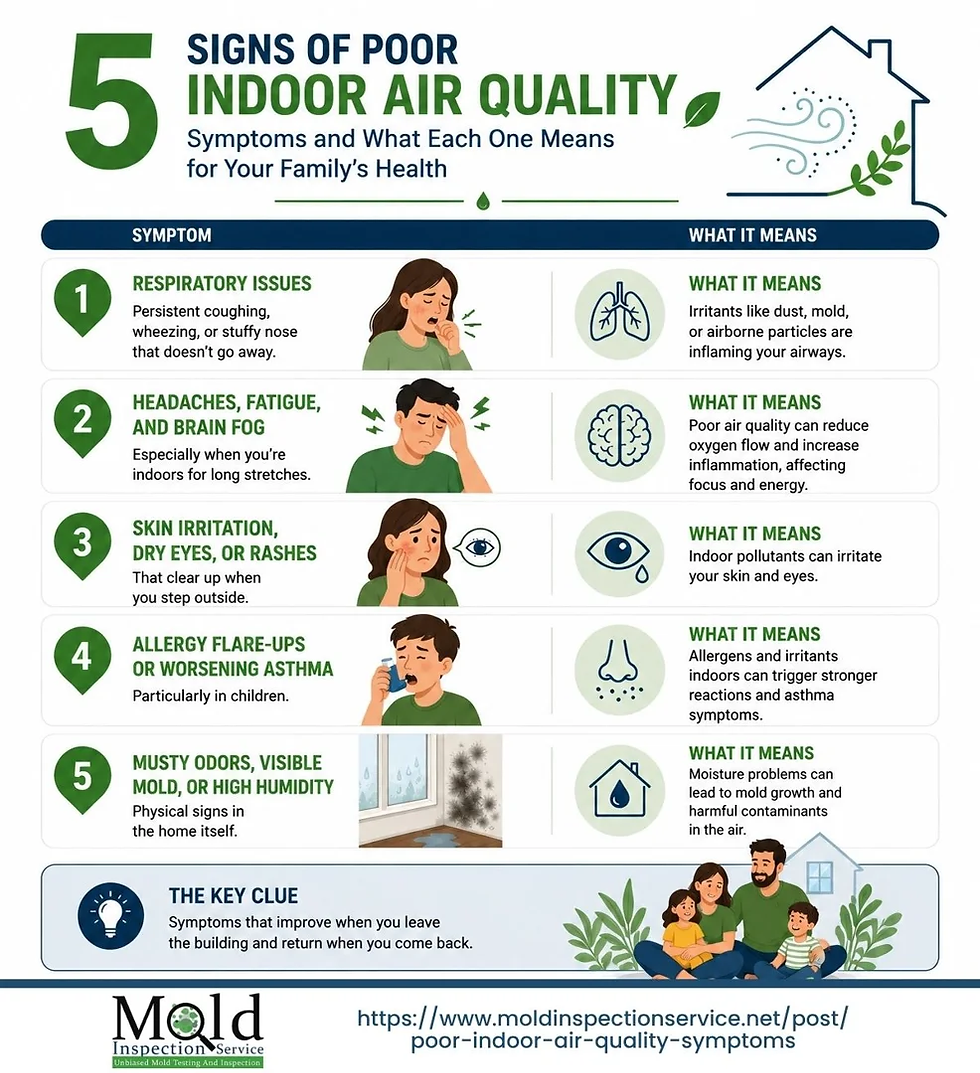
5 Signs Your Indoor Air Quality Is Affecting Your Health
Most indoor pollutants are invisible. Your body usually registers them before you do, and the five signs below are the ones that bring Sacramento-area homeowners to us most often.

1. Respiratory Issues and Persistent Coughing
Your respiratory system is where airborne irritants land first. Breathing in dust, pet dander, chemical fumes, or mold spores makes your airways react to flush them out.
Common respiratory symptoms of poor indoor air quality:
Persistent coughing or a tickle in the throat
Unexplained wheezing or shortness of breath
Sinus congestion, sneezing, and a runny nose
Dry, burning sensations in the nose and throat
Telling a cold apart from seasonal allergies and an indoor air problem is genuinely hard. The pattern to watch is location. Ask yourself: do my symptoms ease when I leave for work or school, then return a few hours after I get home? If the answer is yes, your home environment is the place to look.
The American Lung Association applies the same logic and offers a room-by-room list of questions worth walking through. If your family's "cold" has run for months without relief, it's time to examine what is floating in your air.
2. Unexplained Headaches, Fatigue, and Brain Fog Indoors
Have you ever sat through a long meeting in a closed room, felt completely drained, then perked up the moment you stepped outside? That is often a direct result of inadequate ventilation and elevated carbon dioxide.
When a home or office lacks proper fresh air exchange, carbon dioxide from breathing builds up. Elevated CO2 and volatile organic compounds (VOCs, the chemical vapors given off by paint, cleaners, and new furniture) can produce:
Dull, persistent headaches
Unusual fatigue and lethargy
Poor concentration and mild forgetfulness
Research supports the connection. NIEHS-funded work led by the Harvard T.H. Chan School of Public Health found that office workers scored higher on cognitive performance measures in "green" environments with low indoor pollutants and low carbon dioxide levels. If you work from home and drag through every afternoon, stale air may be part of why.
3. Skin Irritation, Rashes, and Dry Eyes That Improve Outside

Your eyes and skin sit in the surrounding air all day. Airborne chemicals and fine particles irritate them quickly.
You or your children might notice:
Dry, itchy, or burning eyes
Unexplained skin rashes, hives, or dry, flaky patches
Eczema flare-ups that hold on despite moisturizer
VOCs are a frequent trigger. Common household sources include cleaning chemicals, synthetic fragrances, air fresheners, new furniture, and new carpeting. The EPA and CPSC guide reports that levels of several organic compounds average two to five times higher indoors than outdoors. If your eyes stop burning and your skin settles during a weekend spent outdoors, your indoor air is worth testing.
4. Allergy Flare-Ups and Worsening Asthma in Children
For families managing asthma or allergies, indoor air quality has direct consequences. Dust mites, pet dander, pest droppings, and mold spores rank among the most common asthma triggers found inside a home.
The EPA is specific about two of them. Mold spores can trigger asthma episodes in people who are sensitive to mold. Dust mite body parts and droppings trigger asthma in people allergic to them, and the EPA notes that dust mite exposure can bring on asthma in children who have not previously shown symptoms.
Children take in more of whatever is in the air than adults do. The American Lung Association explains that children's airways are small and still developing, and that they breathe more rapidly and inhale more air relative to their size.
If your child's asthma or allergy symptoms spike specifically at home, in their bedroom, or at their daycare, the air deserves a closer look. We also provide Air Quality Testing for Daycare Facilities for families and operators across Northern California.
5. Musty Odors, Visible Mold, and High Humidity

Sometimes the signal is sensory. Your nose and your eyes tell you a lot about the health of a home.
A persistent musty, earthy, or "wet basement" smell usually means mold is growing somewhere, even when nothing is visible. Mold releases microscopic spores that travel through the air. Depending on the person and the level of exposure, those spores can bring on allergic reactions, respiratory symptoms, and asthma episodes.
Mold cannot grow without moisture. Keeping indoor humidity between 30% and 50% is the most effective way to prevent it. Condensation on your windows or damp patches on drywall means moisture is present and mold may already be established nearby.
To understand how moisture drives these problems, read our guide on High Humidity and Mold Growth in Your Home. If you suspect mold and can't find the source, a professional Mold Testing assessment is the safest way to locate hidden growth behind walls or under flooring.
How Can You Test, Improve, and Protect Your Home's Air Quality?
If you suspect your home has an air quality issue, five steps will help right away:
Increase ventilation. Open windows daily when outdoor air quality is good to flush out stale air. Check current conditions at AirNow.gov first, especially during fire season.
Use exhaust fans. Run kitchen and bathroom fans when cooking or showering, and leave them running for 20 minutes afterward.
Upgrade HVAC filters. Replace heating and cooling filters every one to three months, and choose a filter rated to capture fine dust and allergens.
Control humidity. Hold levels between 30% and 50%. Run a dehumidifier in damp basements or crawl spaces.
Install safety monitors. Carbon monoxide is a deadly, odorless gas, so put working CO detectors on every level of your home. Get a radon test as well, as radon is a naturally occurring radioactive gas and the second-leading cause of lung cancer in the U.S.
If you are dealing with a potential issue specifically in your kitchen, check out our guide on The Kitchen Mold Conundrum.
What Are the Benefits of Professional Air Quality Testing?

DIY monitors work well for daily tracking of temperature, humidity, carbon dioxide, and particle counts. Identifying specific mold species, chemical hazards, or hidden moisture behind finished surfaces calls for laboratory analysis and field instruments.
Professional testing gives homeowners four things a retail kit cannot:
Clear answers. Laboratory-backed results showing what is actually in your air.
Hidden sources located. Thermal imaging and moisture meters find mold growth behind walls and under floors.
A spending roadmap. Testing tells you what to fix, so you buy only the equipment your home actually needs.
No conflict of interest. An independent inspector has no financial stake in the repairs that follow.
DIY Monitors and Professional Testing Side by Side
Feature | DIY Air Monitors & Test Kits | Professional IAQ Testing |
Cost | Low | Moderate |
Accuracy | Varies with placement and user technique | Calibrated instruments and accredited laboratory analysis |
What it detects | Temperature, humidity, CO₂, PM2.5 | Specific mold species, VOCs, allergens, moisture sources |
Reporting | Raw numbers | Written report with findings, locations, and root causes |
The EPA and CPSC guide The Inside Story: A Guide to Indoor Air Quality covers residential air safety standards in full.
If you want to prevent moisture problems yourself, read our practical tips on Ways to Prevent Mold Growth. For anyone working from home, we offer specific guidance on Home Office Air Quality Testing.
Get Clear Answers About Your Home's Air Today!
Mold Inspection Service provides independent environmental testing across Sacramento, CA, and the surrounding El Dorado, Placer, Yolo, and Napa counties.
Because we do not perform mold remediation or air duct cleaning, we have no financial interest in what the results show. Our goal is to give you honest, accurate answers so you can protect your family's health.
Ready to stop guessing and start breathing easier? Contact us today to schedule your professional IAQ Testing assessment.
Comments